
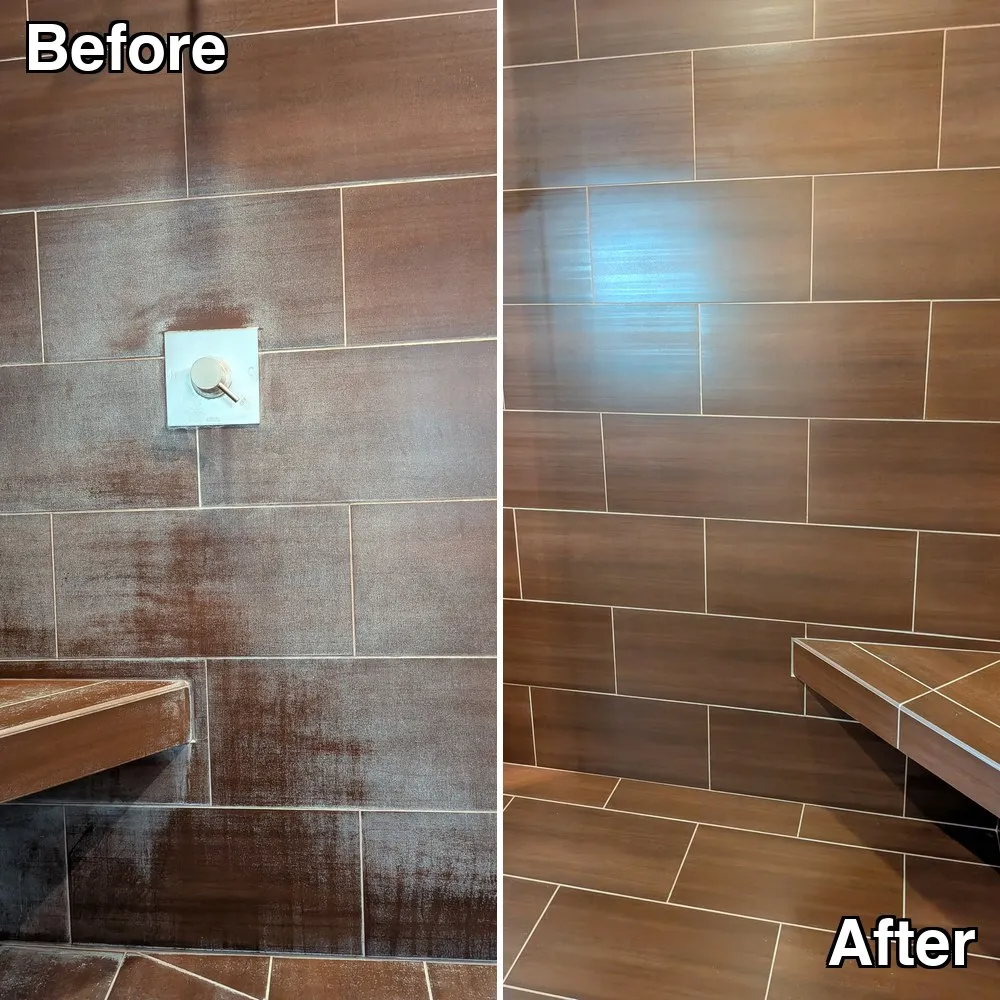
Can old tile look new again? How professional restoration removes years of buildup and revives grout before you replace it.
Your bathroom tile is 15 years old.
Your kitchen floor has been there even longer.
The grout has darkened. The tile looks dull. No matter how often you clean it, the entire surface seems tired.
So, is the tile actually worn out?
Maybe not.
Old tile can often look dramatically better after professional cleaning and restoration, especially when the tile itself is structurally sound and the primary problems are accumulated dirt, soap residue, grease, minerals, stained grout or years of surface buildup.
In many homes, the tile isn't the real problem.
What's accumulated on and around it is.
Before you start tearing out an existing tile installation, professional tile restoration can help determine how much life is still hiding underneath years of use.
What Is Professional Tile Restoration?
Professional tile restoration is the process of cleaning, improving and protecting an existing tile surface rather than automatically replacing it.
The exact process depends on the material and its condition.
It may include:
Professional tile cleaning
Deep grout cleaning
High-temperature vapor cleaning
Removal of accumulated residue
Treatment of grease and oils
Removal of appropriate mineral buildup
Detailed cleaning of grout lines and textured surfaces
Grout restoration
Professional sealing of appropriate porous surfaces
Ongoing surface protection
The objective isn't simply to make old tile look cleaner for a few days.
It's to restore the existing surface as much as its condition allows and help protect it against future staining and buildup.
Why Does Old Tile Start Looking So Bad?
Tile ages differently than many homeowners assume.
Sometimes the tile itself has changed.
But often, what you're seeing is the result of years of use.
Think about what a tiled surface encounters over 10, 15 or 20 years.
Bathroom and Shower Tile
Bathroom surfaces can accumulate:
Soap residue
Body oils
Shampoo and conditioner
Minerals
Moisture
Personal-care products
Everyday contaminants
Kitchen Tile
Kitchen surfaces can accumulate:
Grease
Cooking oils
Food residue
Spills
Dirt
Cleaning-product residue
Pet traffic
Foot traffic
Tile Floors
Floors may encounter:
Shoes
Mud
Pets
Food
Drinks
Cleaning water
Dirt
Heavy foot traffic
A little residue at a time doesn't seem significant.
But multiply it by thousands of days.
Eventually, the surface can look completely different from the tile you originally installed.
Is the Tile Dirty, or Is It Actually Damaged?
This is the most important question to answer before considering replacement.
Dirty tile and damaged tile aren't the same thing.
Professional restoration may be worth exploring when:
Tile looks dull
Grout has darkened
The surface has accumulated years of residue
Shower tile has soap or mineral buildup
Kitchen tile has grease buildup
Floor grout stays dirty after mopping
Tile is securely installed
You still like the existing design
Routine household cleaning no longer works
Replacement or repair may be more appropriate when:
Tiles are significantly cracked
Tiles are loose or moving
The underlying substrate is damaged
Water intrusion is present
The installation has failed
Significant physical damage exists
You simply want a completely different material or design
A professional evaluation helps determine which situation you're dealing with.
Why Does Dirty Grout Make Tile Look Older?
Sometimes the tile isn't what makes a floor or shower look old.
It's the grout.
Traditional cement-based grout is porous and can collect dirt, moisture, oils and other contaminants over time.
As grout lines darken, they create contrast around every tile.
A floor that once had light, consistent grout may develop a dark grid between otherwise good-looking tiles.
The entire installation suddenly appears worn.
Professionally restoring the grout can dramatically change how the surrounding tile looks.
That's why Everstone evaluates tile and grout as one complete surface.
Why Doesn't Regular Cleaning Restore Old Tile?
Routine household cleaning is designed for maintenance.
Professional restoration addresses accumulated buildup.
There's a difference.
Mopping, wiping and ordinary bathroom cleaning help manage day-to-day dirt and residue.
But over many years, contaminants can accumulate within grout lines, textured surfaces, corners and other areas that are difficult to reach.
Homeowners often respond by using increasingly aggressive cleaners or scrubbing harder.
That can create additional problems.
Not every chemical is appropriate for every surface.
Certain acidic, alkaline or abrasive products can potentially discolor, etch or damage grout, natural stone and other materials when used incorrectly.
Professional restoration starts by identifying the surface rather than assuming stronger cleaning is always better.
How Everstone Professionally Restores Old Tile
At Everstone Surface Solutions, our approach is built around three steps:
Clean. Restore. Protect.
The exact treatment depends on the material and its condition, but our process starts with understanding what you already have.
Step 1: Evaluate the Surface
Before applying cleaners, heat or protective products, we evaluate the tile and grout.
We look at:
Tile material
Grout type
Surface condition
Existing coatings or sealers
Dirt and staining
Grease or oil buildup
Soap residue
Mineral deposits
Cracked or damaged grout
Loose or damaged tile
Other conditions that may affect restoration
This helps us determine what's contamination, what's staining and what's actual physical damage.
Step 2: Use Proprietary Commercial-Grade Cleaners
Everstone uses proprietary commercial-grade cleaning products as part of our professional hard-surface restoration process.
Our cleaning and sealing products were developed with professional chemistry expertise.
Why does that matter?
Because different surfaces and contaminants require different approaches.
Kitchen grease isn't the same as shower soap residue.
Mineral buildup isn't the same as ordinary dirt.
Natural stone isn't necessarily treated the same way as ceramic or porcelain.
Professional restoration means matching the treatment to the surface.
Step 3: Use High-Temperature Vapor When Appropriate
Everstone uses professional vapor equipment that produces temperatures reaching up to 330°F at the equipment.
High-temperature vapor gives our technicians another tool for loosening accumulated residue and cleaning grout lines, textured surfaces, corners and other difficult areas.
Vapor is used as part of our professional cleaning and sanitizing process rather than relying solely on aggressive scrubbing.
This can be particularly useful on surfaces where years of buildup have accumulated in areas that ordinary household cleaning struggles to reach.
Step 4: Detail the Tile and Grout
Professional restoration isn't simply running a machine across the surface.
Details matter.
Grout lines.
Corners.
Edges.
Textured areas.
Areas around fixtures.
High-traffic sections of flooring.
Our technicians focus on the places where residue has accumulated and where the contrast between clean and dirty surfaces is most noticeable.
Step 5: Evaluate the Restored Surface
Once years of contamination have been removed, you can better see the actual condition of the surface underneath.
Sometimes homeowners are surprised by what was hiding there.
Tile they thought was permanently dull may still have plenty of life.
Grout they assumed needed replacement may simply have been heavily contaminated.
Other times, cleaning reveals permanent staining or physical deterioration that requires additional restoration or repair.
A professional should tell you the difference.
Step 6: Protect Appropriate Surfaces
Cleaning the surface is only part of the job.
After appropriate porous tile, grout or natural stone has been professionally cleaned and prepared, Everstone can apply our proprietary commercial-grade sealer.
Everstone backs that sealer with a 5-year limited warranty against sealer failure — peeling, flaking or excessively rapid wear. Full terms are on our warranty page.
The purpose is to help reduce the future penetration of:
Moisture
Dirt
Oils
Grease
Food spills
Soap residue
Other contaminants
Professional sealing doesn't make a surface maintenance-free or completely stain-proof.
It helps make routine maintenance easier and gives appropriate porous materials additional protection.
That's the "Protect" in:
Restore. Protect. Enjoy.
What Types of Tile Can Be Professionally Restored?
Many hard surfaces may be candidates for professional restoration, depending on their material and condition.
These can include:
Ceramic tile
Porcelain tile
Natural stone
Shower tile
Bathroom tile
Kitchen tile
Tile floors
Backsplashes
Countertop surfaces
Commercial tile and grout
However, different materials require different treatment.
Natural stone, for example, can have very different characteristics from porcelain.
That's why Everstone evaluates the actual surface before recommending a cleaning or restoration process.
Can Old Shower Tile Be Restored?
Often, yes.
Showers are one of the places where homeowners frequently assume old tile needs to be replaced.
Years of soap, minerals, body oils and moisture can dramatically change the appearance of the shower.
Grout lines become dark.
Tile becomes dull.
Corners collect residue.
The entire shower starts looking dated.
If the tile is securely installed and the underlying shower system is sound, professional cleaning and restoration may significantly improve its appearance.
If there are loose tiles, water intrusion, failed waterproofing or structural problems, those issues need to be addressed separately.
Five Signs a Shower Should Be Restored Rather Than Replaced
1. The grout is dark, stained or discolored. Grout is porous and absorbs moisture and contaminants over time. Soap residue, body oils and everyday buildup gradually change the appearance of the grout lines. If the grout is primarily dirty rather than structurally failing, professional cleaning and sealing may significantly improve it.
2. The tile looks dull or dingy. Soap, shampoo, minerals and water repeatedly contact the same surfaces. What appears to be worn-out tile may actually be tile covered by years of buildup.
3. You've tried everything and it still doesn't look clean. If you've scrubbed the grout and worked through several different cleaners without the result you want, the problem is likely beyond routine household cleaning — and escalating to harsher chemicals risks discoloring or damaging the surface instead.
4. You like the existing tile. Sometimes there's nothing wrong with the design. If you like the color, layout or stone, and the underlying installation is sound, restoration lets you keep what you already have.
5. You want to avoid an unnecessary remodel. Replacing shower tile means demolition, disposal, waterproofing, substrate preparation, new materials, installation, grout, caulk — and downtime while the shower is unusable. If the problem is cosmetic, find out whether restoration solves it before committing to any of that.
Can Old Kitchen Tile Be Restored?
Kitchen tile can also be an excellent candidate for professional restoration.
A kitchen floor may accumulate years of:
Grease
Food oils
Spills
Dirt
Pet traffic
Shoe traffic
Cleaning residue
Often, the grout becomes significantly darker while the tile remains structurally sound.
Professional cleaning and grout restoration can change the appearance of the entire floor without replacing the existing installation.
Can Old Grout Look New Again?
It depends on its condition.
Professional cleaning can significantly improve many grout surfaces affected by accumulated contamination.
But restoration has limits.
Grout may have:
Permanent staining
Discoloration
Cracks
Missing areas
Physical deterioration
Previous damage
A reputable restoration company shouldn't promise that every old grout line will return to its original appearance.
Instead, the goal should be to determine what's realistically restorable and set expectations accordingly.
Can You Restore Natural Stone Tile?
Many natural stone surfaces can be professionally cleaned, restored and protected.
But natural stone requires particular care.
Different types of stone vary in:
Porosity
Hardness
Sensitivity to acids
Finish
Maintenance requirements
Using the wrong cleaning product can potentially etch, discolor or otherwise damage certain stone surfaces.
That's another reason professional surface identification matters.
Everstone evaluates the material before selecting the appropriate treatment.
Is Professional Tile Restoration Worth It?
If the existing tile is structurally sound, restoration can be well worth exploring before replacement.
Consider what replacement can involve:
Demolition
Disposal
New tile
New grout
Installation labor
Substrate preparation
Potential waterproofing work
Construction dust
Downtime
Disruption to your home
Professional restoration works with the surface that's already there.
If the primary problem is accumulated contamination and staining rather than structural failure, restoring the existing installation can be a much more practical approach.
Is It Cheaper to Restore Tile Than Replace It?
In many situations, professional cleaning and restoration involve substantially less work than removing and replacing an entire tile installation.
However, the exact cost depends on:
Size of the area
Type of tile
Type of grout
Condition
Level of contamination
Repairs required
Protective treatments selected
The important point isn't simply that restoration may cost less.
It's that replacement may be unnecessary.
Before investing in demolition and new materials, determine whether the existing surface can be restored.
How Long Does Professionally Restored Tile Last?
There's no universal answer.
Tile itself can be extremely durable.
The longevity of a restored surface depends on:
Condition of the original installation
Type of material
Amount of use
Cleaning habits
Moisture exposure
Foot traffic
Protective treatments
Ongoing maintenance
Professional restoration doesn't freeze a surface in time.
Your shower will still be used.
Your kitchen will still experience spills.
Your floors will still get dirty.
The goal is to restore the surface and make it easier to maintain moving forward.
How Can You Keep Restored Tile Looking Good?
After professional restoration, simple maintenance habits can make a difference.
Clean Spills Promptly
Don't allow oils, food, coffee, soap or other contaminants to remain on porous surfaces longer than necessary.
Use Appropriate Cleaning Products
Know what material you're cleaning.
Avoid assuming stronger or more acidic cleaners are automatically better.
Keep Bathrooms Ventilated
Run bathroom exhaust fans during and after showering to help manage moisture.
Remove Loose Dirt Before Mopping
Sweep or vacuum floors before wet cleaning so you're not moving loose dirt into grout lines.
Keep Mop Water Clean
Change dirty cleaning water as needed rather than redistributing contaminants.
Maintain Protective Treatments
Professional sealers don't last forever.
Have porous surfaces evaluated periodically and resealed when appropriate.
Restore vs. Replace: How Do You Decide?
A simple way to think about it is:
Consider Restoration When:
Tile is structurally sound
Tile is securely installed
You still like the existing surface
Grout is primarily dirty or stained
The problem is cosmetic
Years of buildup have accumulated
Routine cleaning no longer works
Consider Repair or Replacement When:
Tile is cracked or broken
Tile is loose
Grout is severely crumbling
The substrate is damaged
Water intrusion is present
The installation has failed
You want a completely different design
If you don't know which category your surface falls into, that's where a professional evaluation can help.
Pacific Northwest Tile Restoration Experience on Every Crew
Everstone Surface Solutions brings 10+ years of Pacific Northwest experience on every crew, servicing residential and commercial hard surfaces across the region.
Our team works with properties throughout the Portland and Vancouver metro area and surrounding communities.
We've seen what years of moisture, rainy weather, pets, families, cooking, showers and everyday life can do to hard surfaces.
We've also seen how dramatically many of those surfaces can improve when they're professionally restored.
Our process combines:
Professional high-temperature vapor reaching up to 330°F
Proprietary commercial-grade cleaners and sealers
Products developed with professional chemistry expertise
Professional surface evaluation
Detailed restoration techniques
10+ years of Pacific Northwest experience on every crew
We're not here to automatically tell you to replace what you already own.
Our job is to determine what can be restored.
Before You Tear Out Old Tile, See What's Underneath the Years
Old doesn't necessarily mean worn out.
Dark grout doesn't necessarily mean failed grout.
And dull tile doesn't necessarily mean you need a remodel.
Sometimes, years of buildup are hiding a perfectly good surface underneath.
Everstone Surface Solutions combines professional high-temperature vapor reaching up to 330°F, proprietary commercial-grade cleaners and sealers, products developed with professional chemistry expertise and 10+ years of Pacific Northwest experience on every crew to clean, restore and protect hard surfaces.
Before you replace tile you've already invested in, find out whether it can be professionally restored.
You may be surprised by what's still there.
Restore. Protect. Enjoy.
Contact Everstone Surface Solutions to request a free estimate for professional tile and grout restoration in the Portland and Vancouver metro area.*
Frequently Asked Questions
Can old tile really look new again?
Many older tile surfaces can look dramatically better after professional restoration, particularly when the tile is structurally sound and the primary problems are dirt, grease, soap residue, minerals or stained grout. Results depend on the material and its condition.
Is professional tile restoration better than replacement?
Neither option is always better. If tile is structurally sound, restoration may extend its useful life without demolition. Damaged, loose or failed tile installations may require repair or replacement.
Can professional cleaning restore old grout?
Professional cleaning can significantly improve many grout surfaces affected by years of dirt, oils, soap and other contaminants. Permanent staining or physical damage may require additional restoration or repair.
Can shower tile be restored without remodeling the bathroom?
Often, yes. If the existing shower tile and underlying installation are sound, professional cleaning, grout restoration and sealing may improve the surface without a full remodel.
Can kitchen floor tile be professionally restored?
Yes. Many kitchen tile floors can be professionally cleaned and restored, including grout affected by grease, food spills, dirt and years of foot traffic.
Should tile and grout be sealed after restoration?
Many porous grout, stone and tile surfaces can benefit from an appropriate professional sealer after cleaning and preparation. The correct treatment depends on the material.
How do I know if my tile needs restoration or replacement?
If the tile is securely installed but looks dull, stained or dirty, restoration may be worth exploring. Cracked or loose tile, water intrusion, substrate damage or installation failure may require repair or replacement.
Does Everstone restore old tile near Portland and Vancouver?
Yes. Everstone Surface Solutions provides professional tile and grout cleaning, restoration and protection for residential and commercial properties throughout the Portland and Vancouver metro area and surrounding Pacific Northwest communities.