
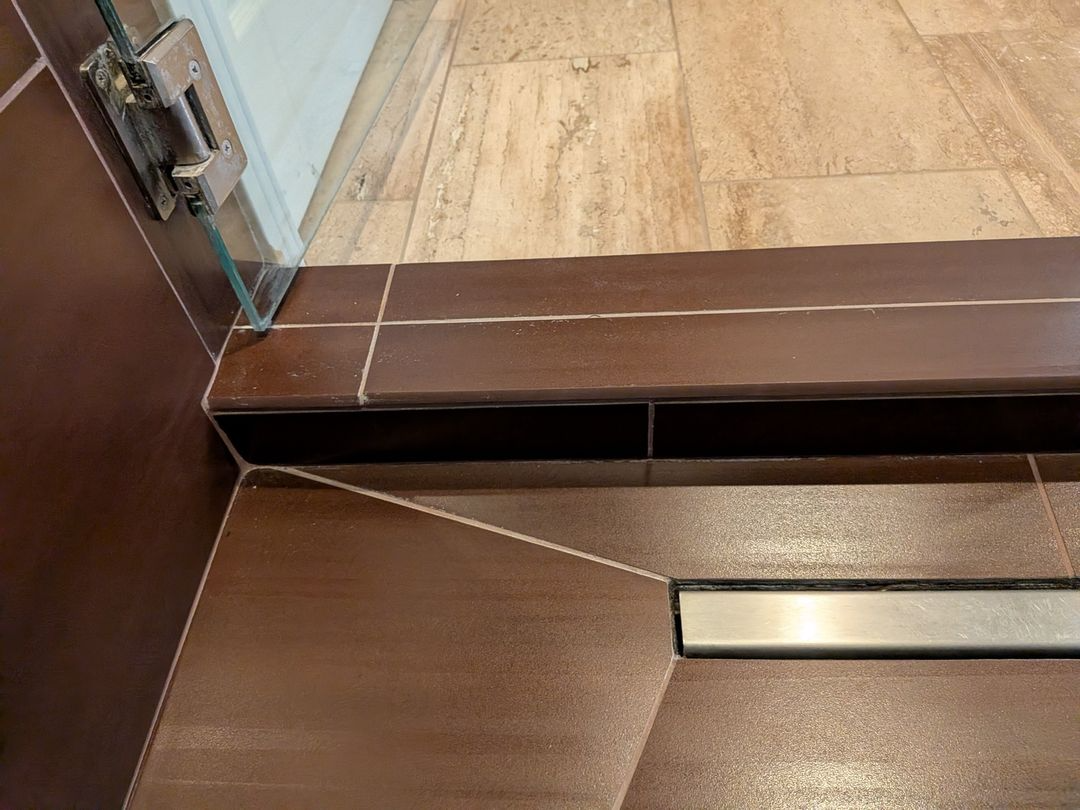
Porcelain, ceramic and natural stone each need different care. How to clean each safely and what will damage them.
Tile is tile, right?
Not exactly.
Porcelain, ceramic and natural stone may look similar once installed, but they're very different materials. Those differences affect how they absorb moisture, respond to cleaning products, stain and should be maintained.
Using the same cleaner on every hard surface can be a mistake.
Porcelain and glazed ceramic tile are generally less porous and easier to maintain than many natural stones. Natural stone can be more porous and sensitive to acidic or abrasive cleaning products. Grout also requires separate consideration because it may be more porous than the tile surrounding it.
That's why professional surface cleaning should begin with one basic question:
What material are we cleaning?
At Everstone Surface Solutions, identifying the surface comes before selecting the cleaner, equipment or protective treatment.
Here's what homeowners should know about caring for porcelain, ceramic and natural stone.
What's the Difference Between Porcelain, Ceramic and Natural Stone?
Although these materials can all be used for floors, showers, bathrooms, kitchens and other tiled surfaces, they're not interchangeable.
Porcelain Tile
Porcelain is a type of ceramic tile manufactured from refined clay and fired at high temperatures.
It is dense and has low water absorption, making it a popular choice for:
Bathroom floors
Shower walls
Shower floors
Kitchen floors
Entryways
High-traffic areas
Commercial spaces
Porcelain is generally durable and relatively easy to maintain.
But that doesn't mean the entire installation is maintenance-free.
The grout surrounding porcelain tile may still be porous and susceptible to staining.
Ceramic Tile
Ceramic tile is also made from clay and fired in a kiln, but it generally differs from porcelain in density and water absorption.
Many ceramic tiles have a glazed surface.
That glaze can make the face of the tile relatively easy to clean, while the grout lines remain more vulnerable to dirt, moisture and staining.
Ceramic tile is commonly found in:
Kitchens
Bathrooms
Backsplashes
Shower walls
Floors
Countertops
As with porcelain, the correct cleaning process depends on the specific tile, finish, grout and condition.
Natural Stone
Natural stone isn't manufactured tile.
It is quarried material cut and finished for use in homes and commercial properties.
Common natural stone surfaces include:
Marble
Granite
Travertine
Limestone
Slate
Each type of stone has its own characteristics.
Some stones are more porous.
Some are sensitive to acidic cleaners.
Some can scratch or etch.
Some require specialized protective treatments.
That's why natural stone shouldn't automatically be cleaned the same way as porcelain or ceramic tile.
How Should Porcelain Tile Be Cleaned?
Porcelain is known for durability and low water absorption, which generally makes routine maintenance straightforward.
For everyday cleaning:
Remove loose dirt and debris.
Use a cleaner appropriate for porcelain tile.
Follow the product's dilution and application instructions.
Remove cleaning residue thoroughly.
Pay attention to the grout lines, not just the tile.
The last point matters.
Homeowners often focus on the porcelain itself because that's the largest visible part of the surface.
But the grout may be what makes the entire floor or shower look dirty.
Why Can Porcelain Tile Still Look Dirty?
Even a relatively nonporous tile can accumulate material on its surface.
Common sources include:
Soap residue
Hard-water minerals
Grease
Cleaning-product residue
Dirt
Oils
Foot traffic
Textured porcelain can be particularly challenging because residue may settle into small surface variations.
And again, grout can collect contamination even when the tile itself remains relatively clean.
That's why a porcelain floor may look dull or dirty despite frequent mopping.
How Should Ceramic Tile Be Cleaned?
Glazed ceramic tile is also generally easy to maintain when the correct products are used.
Routine care usually involves:
Removing loose dirt
Using a surface-appropriate cleaner
Wiping or mopping the tile
Thoroughly removing cleaning residue
Keeping grout lines clean
Addressing spills before they become difficult to remove
But ceramic tile comes in many forms.
Glazed and unglazed ceramic surfaces may have different cleaning requirements.
The condition of the glaze also matters.
Older, worn or damaged tile should be evaluated before aggressive cleaning methods are used.
Is Ceramic Tile More Delicate Than Porcelain?
Porcelain is generally denser than standard ceramic tile, but that doesn't mean ceramic is inherently difficult to maintain.
Both materials can perform extremely well when properly installed and cared for.
The more important issue for homeowners is understanding the specific surface.
Don't assume that because a product is labeled "tile cleaner," it's appropriate for every tile in your home.
Read the manufacturer's recommendations and know what material you're working with.
How Should Natural Stone Be Cleaned?
Natural stone requires more care.
A cleaning product that works perfectly well on a porcelain floor may be inappropriate for marble, limestone or another natural stone.
For routine maintenance, homeowners should generally use products specifically intended for their particular type of stone and follow the stone or product manufacturer's care instructions.
Avoid experimenting with strong household chemicals simply because they're described online as natural cleaning solutions.
The biggest example is acid.
Can Vinegar Damage Natural Stone?
Yes, vinegar can damage certain natural stones.
Vinegar is acidic.
Calcite-based stones such as marble, limestone and travertine can react with acids.
The result can be etching, which changes the surface finish of the stone.
This is one reason a common DIY cleaning recommendation can cause a problem.
Something marketed as a simple household cleaning solution may be perfectly acceptable for one surface and inappropriate for another.
Lemon juice and other acidic products can create similar concerns.
If you don't know what type of stone you have, don't experiment with acidic cleaners.
What Is Etching on Natural Stone?
Etching is different from a stain.
A stain involves material penetrating or discoloring the stone.
Etching is a physical or chemical change to the surface itself.
On polished stone, an etched area may appear:
Dull
Cloudy
Lighter
Rougher
Less reflective than the surrounding surface
Because the finish itself has changed, simply cleaning the area doesn't necessarily correct the problem.
Professional restoration may be required.
This distinction is important because homeowners sometimes continue scrubbing what they believe is a stain when they're actually looking at surface damage.
Does Natural Stone Need to Be Sealed?
Many porous natural stone surfaces can benefit from an appropriate professional sealer.
However, there isn't one universal rule for every stone.
The appropriate treatment depends on:
Type of stone
Porosity
Finish
Location
Existing treatments
Exposure to moisture
Exposure to oils or food
Condition of the surface
Professional sealing can help reduce the penetration of contaminants into appropriate porous stone.
It doesn't make natural stone indestructible.
And it doesn't mean you can use any cleaner afterward.
The stone still needs appropriate routine care.
What About Grout?
This is where tile maintenance gets more complicated.
You may have a relatively nonporous porcelain tile next to a porous cement-based grout line.
That means you're cleaning two different materials at the same time.
Grout can collect:
Dirt
Moisture
Soap residue
Body oils
Grease
Food oils
Minerals
Cleaning residue
Other everyday contaminants
Over time, grout can become much darker than the tile surrounding it.
That's why a tiled surface can look dirty even when the tile itself is relatively clean.
Professional tile cleaning should evaluate both the tile and the grout rather than treating the installation as one uniform material.
Why the Same Cleaner Doesn't Work on Every Surface
Cleaning depends on two things:
What is the surface?
And:
What are we trying to remove from it?
Kitchen grease is different from shower soap residue.
Mineral deposits are different from dirt.
Porcelain is different from marble.
Grout is different from both.
A professional cleaning process considers those variables before selecting a treatment.
That's why Everstone doesn't rely on one universal cleaner for every surface.
How Everstone Professionally Cleans Tile and Stone
At Everstone Surface Solutions, professional surface restoration begins with identification.
We need to know what we're working on before deciding how to clean it.
Our process is built around:
Clean. Restore. Protect.
Step 1: Identify the Surface
We first evaluate whether we're working with:
Porcelain
Ceramic
Natural stone
Grout
Another hard-surface material
When natural stone is present, understanding the type of stone becomes particularly important.
Step 2: Evaluate Its Condition
Next, we look at what's happening to the surface.
That may include:
Dirt
Staining
Grease
Oils
Soap residue
Mineral deposits
Existing sealers
Surface damage
Etching
Cracked grout
Loose tile
Other signs of deterioration
This helps distinguish a cleaning problem from physical damage.
Step 3: Select the Appropriate Professional Cleaner
Everstone uses proprietary commercial-grade cleaning products as part of our professional hard-surface restoration process.
Our cleaners and sealers were developed with professional chemistry expertise.
That professional chemistry matters because we aren't trying to overpower every surface with the strongest possible chemical.
We're trying to select an appropriate treatment for the material and contamination we're addressing.
Step 4: Use High-Temperature Vapor When Appropriate
Everstone also uses professional vapor cleaning equipment producing temperatures reaching up to 330°F at the equipment.
High-temperature vapor gives our technicians another tool for loosening accumulated residue and cleaning grout lines, textured surfaces and other difficult areas.
The important phrase is when appropriate.
Professional cleaning isn't about applying maximum heat or the same technique to every surface.
Material, condition and application all matter.
Our technicians determine the appropriate process for the surface being treated.
Step 5: Detail the Surface and Grout
Professional restoration requires attention to the details.
That includes:
Grout lines
Corners
Edges
Textured surfaces
Areas around fixtures
High-traffic areas
Locations with concentrated buildup
Removing residue from the tile without properly addressing dirty grout may still leave the entire installation looking worn.
Step 6: Protect Appropriate Porous Surfaces
After the surface has been professionally cleaned and prepared, Everstone can apply our proprietary commercial-grade sealer to appropriate porous surfaces.
Everstone backs that sealer with a 5-year limited warranty against sealer failure — peeling, flaking or excessively rapid wear. Full terms are on our warranty page.
Depending on the material, that may include certain grout and natural stone surfaces.
The sealer helps reduce the penetration of moisture, oils, stains and other contaminants.
That can make routine maintenance easier and help protect the restored surface.
Which Tile Is Easiest to Maintain?
For homeowners choosing new tile, porcelain is often attractive because of its density, durability and low water absorption.
Glazed ceramic can also be relatively easy to maintain.
Natural stone may require more specialized care and periodic protective treatment depending on the material.
But there's another factor homeowners sometimes overlook:
The grout.
Even a low-maintenance porcelain tile installation can become difficult to keep looking clean if the grout is porous, heavily contaminated or poorly maintained.
When evaluating maintenance requirements, consider the entire installation rather than just the tile.
What's the Best Tile for a Shower?
There isn't one material that's right for every homeowner.
Porcelain and ceramic tile are commonly used in showers because they can provide durable, attractive surfaces when properly selected and installed.
Natural stone can create a distinctive appearance but may require more specialized maintenance.
Regardless of the surface, a shower installation also depends on proper:
Waterproofing
Installation
Grouting
Caulking
Ventilation
Maintenance
Cleaning and sealing the visible surface can't correct a failed waterproofing or installation system underneath it.
What's the Best Tile for a Kitchen?
Again, the answer depends on the application.
Porcelain and ceramic are common choices for kitchen floors and backsplashes because of their durability and maintenance characteristics.
Natural stone can also perform beautifully but may require additional care around:
Grease
Oils
Food
Acidic ingredients
Spills
For existing kitchens, you don't necessarily need to replace a surface because it has become difficult to clean.
Professional restoration may be able to remove years of accumulated contamination and reveal the condition of the tile underneath.
What Cleaning Products Should You Avoid on Tile and Stone?
There's no single list that applies to every material.
But homeowners should be cautious with:
Strong acids
Vinegar on acid-sensitive stone
Lemon-based acidic cleaners on sensitive stone
Highly abrasive powders
Aggressive scrubbing pads
Products not intended for the specific material
Mixing household cleaning chemicals
The safest approach is simple:
Know the surface before choosing the cleaner.
If you don't know whether you have ceramic, porcelain, marble, travertine or another material, identify it before using an aggressive product.
Can Professional Cleaning Restore Old Tile and Stone?
In many cases, professional restoration can significantly improve an older surface.
This is particularly true when the primary problem is:
Dirt
Grease
Soap residue
Minerals
Oils
Stained grout
Cleaning-product residue
Years of accumulated contamination
However, cleaning can't reverse every type of physical damage.
Cracks, deep scratches, loose tile, failed installations and certain types of stone damage may require repair or specialized restoration.
A professional evaluation helps determine what's dirty and what's actually damaged.
How Often Should Tile and Stone Be Professionally Cleaned?
There isn't one schedule for every home or material.
Frequency depends on:
Surface material
Amount of use
Number of people in the home
Pets
Foot traffic
Moisture
Ventilation
Kitchen activity
Cleaning habits
Existing protective treatments
Instead of relying only on a calendar, watch how the surface performs.
If routine maintenance no longer restores its appearance, grout stays dark or a stone surface becomes increasingly difficult to maintain, it may be time for professional evaluation.
Professional Tile and Natural Stone Cleaning in Portland and Vancouver
Homes throughout the Pacific Northwest contain an enormous variety of tile and natural stone.
And those surfaces shouldn't all be treated the same way.
Everstone Surface Solutions brings 10+ years of Pacific Northwest experience on every crew, servicing residential and commercial hard surfaces throughout the Portland and Vancouver metro area.
Our professional process combines:
Surface identification and evaluation
Professional high-temperature vapor reaching up to 330°F when appropriate
Proprietary commercial-grade cleaners and sealers
Products developed with professional chemistry expertise
Detailed tile and grout restoration
10+ years of Pacific Northwest experience on every crew
The objective isn't to use the strongest cleaner.
It's to use the right process for the surface.
The Right Cleaning Process Starts With Knowing the Surface
Porcelain.
Ceramic.
Marble.
Granite.
Travertine.
Limestone.
Grout.
They may all be hard surfaces, but they aren't the same surface.
And they shouldn't automatically be treated the same way.
Everstone Surface Solutions combines professional surface knowledge, high-temperature vapor reaching up to 330°F when appropriate, proprietary commercial-grade cleaners and sealers, products developed with professional chemistry expertise and 10+ years of Pacific Northwest experience on every crew to clean, restore and protect hard surfaces.
Before you reach for another bottle of cleaner, make sure you know what you're cleaning.
And before you replace an older tile or stone surface, find out what professional restoration can accomplish.
Restore. Protect. Enjoy.
Contact Everstone Surface Solutions to request a free estimate for professional tile, grout and natural stone cleaning and restoration in the Portland and Vancouver metro area.*