
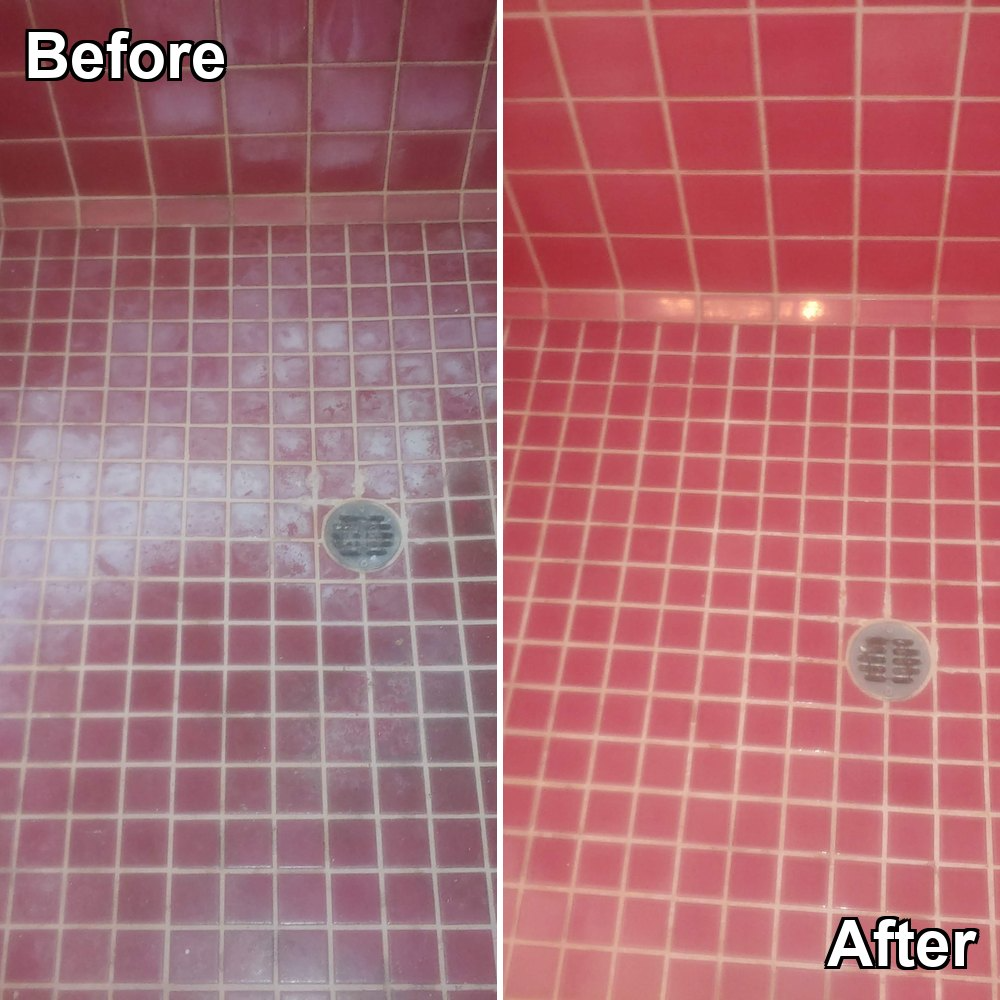
Learn how professional kitchen tile and grout cleaning removes built-up dirt, grease and stains, and how Everstone restores and protects tile and grout.
our kitchen floor gets mopped. Your backsplash gets wiped down. Your countertops get cleaned every day.
So why do the tile and grout still look dirty?
The answer often isn't how frequently you're cleaning.
Kitchen grout is typically porous, which means grease, oils, food residue, dirt and other contaminants can collect in the surface over time. Routine mopping and household cleaners may remove surface dirt without fully addressing years of buildup within grout lines and textured surfaces.
Professional kitchen tile and grout cleaning goes deeper.
At Everstone Surface Solutions, we use professional equipment, high-temperature vapor reaching up to 330°F, proprietary commercial-grade cleaners and professional sealers to clean, restore and protect hard surfaces.
Before replacing old tile or accepting permanently dirty-looking grout, here's what homeowners should know.
Why Does Kitchen Grout Get So Dirty?
The kitchen is one of the hardest-working rooms in your home.
Think about what happens there every day.
You cook.
You eat.
You spill.
People walk in and out.
Pets cross the floor.
Cooking releases tiny amounts of grease and oils into the surrounding environment.
Food falls.
Drinks spill.
And then everything gets cleaned, often with a mop moving across both the tile and grout.
Over time, the kitchen floor may look reasonably clean while the grout lines become progressively darker.
That's because tile and grout aren't the same type of surface.
Why Is Grout Harder to Clean Than Tile?
Many common tile surfaces are relatively smooth and less porous.
Traditional cement-based grout is different.
Grout contains tiny pores and surface irregularities where moisture and contaminants can collect.
Kitchen grout can be exposed to:
Cooking grease
Food oils
Spills
Dirt
Pet traffic
Shoe traffic
Cleaning-product residue
Dirty mop water
Food particles
Everyday household contaminants
As that residue accumulates, grout lines can gradually become darker and more difficult to clean.
Eventually, homeowners may assume the grout is permanently stained.
Sometimes it is.
But sometimes it simply needs a level of professional cleaning that routine household maintenance can't provide.
Why Doesn't Mopping Clean Kitchen Grout?
Mopping is an important part of maintaining tile floors.
But mopping and deep grout cleaning aren't the same thing.
Tile and grout create an uneven surface.
The tile usually sits slightly higher while grout lines are recessed between tiles.
A mop naturally travels across the upper surface.
That means it can clean the tile effectively while leaving some residue behind in the lower grout lines.
In some cases, loosened dirt and dirty cleaning water can also settle into those grout lines.
The result?
The tile looks clean.
The grout gets darker.
And eventually, the contrast between the two makes the entire floor look dirty.
Why Do Kitchen Grout Lines Turn Black?
Dark kitchen grout can have several causes.
Common contributors include:
Embedded dirt
Cooking oils
Grease
Food residue
Repeated spills
Heavy foot traffic
Pet traffic
Moisture
Old cleaning-product residue
Years of accumulated contaminants
The original grout color matters too.
Light-colored grout naturally shows contamination and staining more quickly than darker grout.
But if your grout was originally beige, cream, white or light gray and is now significantly darker, professional cleaning may reveal just how much buildup has accumulated.
What Is Professional Kitchen Tile and Grout Cleaning?
Professional tile and grout cleaning is more than running a machine across the floor.
A proper restoration process starts by understanding the surface.
At Everstone, our technicians evaluate:
Type of tile
Type and condition of grout
Level of contamination
Grease and oil buildup
Existing coatings or sealers
Staining
Surface damage
Cracked or deteriorating grout
Other conditions that may affect treatment
From there, we determine an appropriate professional cleaning and restoration process.
The goal isn't simply to make the floor look cleaner for a few days.
It's to restore the existing surface and help protect it against future staining and buildup.
How Everstone Professionally Cleans Kitchen Tile and Grout
Our professional hard-surface restoration process combines professional equipment, cleaning chemistry, detailed workmanship and protective treatments.
Step 1: Evaluate the Tile and Grout
Not every kitchen floor is the same.
Ceramic, porcelain, natural stone and other materials can require different cleaning products and techniques.
Before we begin, we identify the material and evaluate its condition.
This helps us select an appropriate treatment rather than using one universal cleaner on every surface.
Step 2: Use Proprietary Commercial-Grade Cleaners
Everstone uses proprietary commercial-grade cleaning products developed for professional hard-surface restoration.
Our cleaning and sealing products were developed with professional chemistry expertise.
This gives our technicians access to professional formulations designed to work as part of our complete surface restoration process.
And that's important in kitchens.
Grease isn't the same as mineral buildup.
Food oils aren't the same as ordinary dirt.
Different contaminants can require different approaches.
Step 3: High-Temperature Vapor Cleaning Up to 330°F
One of Everstone's biggest differentiators is our professional vapor cleaning equipment.
Our system produces high-temperature vapor reaching up to 330°F at the equipment.
The heat and vapor help loosen accumulated contaminants while allowing technicians to work along grout lines, textured surfaces and other difficult areas.
This gives us another tool beyond ordinary scrubbing or mopping.
High-temperature vapor is used as part of our professional cleaning and sanitizing process to thoroughly address appropriate hard surfaces.
Step 4: Detail the Grout Lines
Cleaning the tile isn't enough.
If the grout remains dark, the entire floor can still look dirty.
Our technicians focus specifically on grout lines, edges and problem areas where residue tends to accumulate.
This detailed approach helps restore a more consistent appearance across the entire surface.
Step 5: Prepare the Surface for Protection
Once the tile and grout have been thoroughly cleaned, appropriate porous surfaces are prepared for the next important step.
Protection.
We don't want to seal over dirt, oils or contamination.
The surface needs to be properly cleaned and prepared first.
Step 6: Apply Professional Sealer When Appropriate
Everstone can apply our proprietary commercial-grade sealer to appropriate porous surfaces after cleaning.
Everstone backs that sealer with a 5-year limited warranty against sealer failure — peeling, flaking or excessively rapid wear. Full terms are on our warranty page.
The sealer helps reduce the penetration of future liquids, oils, stains and contaminants.
It doesn't make the floor maintenance-free.
But it can make routine cleaning easier and help protect the grout against the same everyday conditions that caused it to become dirty in the first place.
Why Is Sealing Kitchen Grout Important?
Imagine spilling pasta sauce, coffee, cooking oil or another liquid on two different surfaces.
One is relatively nonporous.
The other is porous.
The porous material has a greater opportunity to absorb the spill.
That's essentially the challenge with many traditional grout surfaces.
Professional sealing helps create a protective barrier that reduces the penetration of contaminants.
For kitchen grout, that can be especially useful because the room regularly encounters food, grease, oils and spills.
This is why Everstone considers sealing an important part of surface protection rather than treating professional cleaning as the end of the job.
Clean it. Restore it. Protect it.
What About Kitchen Backsplash Tile and Grout?
Kitchen floors aren't the only surfaces that collect residue.
Backsplashes sit directly in one of the highest-exposure areas of the kitchen.
Cooking can deposit grease, oils and food residue onto the tile and grout behind:
Stoves
Cooktops
Sinks
Food-preparation areas
Tile itself may wipe clean fairly easily.
Grout lines can be more challenging.
Over time, backsplash grout can become darker, greasy or discolored, particularly around cooking areas.
Professional cleaning can help remove accumulated residue and restore the appearance of both the tile and grout.
Can Professional Cleaning Restore Old Kitchen Grout?
In many cases, the improvement can be significant.
Professional cleaning may help restore grout affected by:
Embedded dirt
Grease
Oils
Food residue
General discoloration
Years of accumulated household use
However, not every grout line can be returned to its original appearance.
Results depend on:
Age
Original grout color
Type of grout
Previous cleaning products
Staining
Existing sealer
Physical condition
Previous damage
If grout is cracked, crumbling or missing, cleaning alone won't repair it.
A professional evaluation helps determine what's dirty, what's stained and what's actually damaged.
Should You Replace Dirty Kitchen Tile or Restore It?
A floor that looks old isn't necessarily worn out.
Sometimes the tile itself is still in excellent condition.
It's the grout and accumulated residue making the entire surface look dated.
Before considering replacement, ask:
Is the tile actually damaged, or does it simply need professional restoration?
Restoration may make sense when:
Tile is structurally sound
Grout is primarily dirty or stained
You still like the existing tile
The surface has lost its original appearance
Household cleaning no longer produces good results
You want to extend the useful life of the existing installation
Replacement may make more sense when tile is cracked, loose, structurally damaged or simply no longer fits what you want for the room.
If the surface is sound, professional restoration is worth exploring before demolition.
Is Professional Tile and Grout Cleaning Worth It?
For many homeowners, yes, particularly when the alternative is living with a floor that always looks dirty or considering unnecessary replacement.
Professional cleaning provides something DIY cleaning generally doesn't:
A complete process.
That includes professional surface evaluation, commercial-grade cleaning products, specialized equipment, detailed grout cleaning and professional protective treatments.
It can also save you something homeowners tend to underestimate.
Time.
If you've spent weekend after weekend on your hands and knees scrubbing grout with limited results, professional restoration may be a much more practical solution.
Can I Clean Kitchen Grout Myself?
Routine cleaning is absolutely something homeowners should do.
Regular maintenance helps prevent heavy buildup and extends the time between professional services.
The problem comes when routine cleaning stops working.
If you find yourself reaching for increasingly harsh chemicals, aggressive brushes or online cleaning "hacks," use caution.
Different tile and stone materials can react differently to acidic, alkaline or abrasive cleaners.
Some DIY treatments can discolor grout or damage natural stone and other sensitive surfaces.
Know what material you're cleaning before experimenting with strong products.
How Can I Keep Kitchen Grout Cleaner?
After professional restoration, good maintenance can help keep the surface looking better.
Clean Spills Quickly
Don't allow grease, oils, food or colored liquids to remain on grout longer than necessary.
Sweep or Vacuum Before Mopping
Removing loose dirt first helps prevent it from being moved into grout lines during wet cleaning.
Use Clean Mop Water
Frequently changing dirty cleaning water can help prevent redepositing contaminants onto the floor.
Use Surface-Appropriate Cleaning Products
Avoid assuming the strongest cleaner is the best cleaner.
Use products appropriate for your specific tile and grout.
Protect Porous Grout
Maintain professional sealer when appropriate to help reduce the penetration of stains and contaminants.
Address Heavy Buildup Professionally
If grout stops responding to routine maintenance, professional restoration may be more effective than repeated aggressive cleaning.
How Often Should Kitchen Tile and Grout Be Professionally Cleaned?
There's no universal schedule.
The right frequency depends on the home and how the kitchen is used.
Factors include:
Number of people in the household
Children
Pets
Cooking frequency
Foot traffic
Type of tile
Type of grout
Existing protective treatments
Routine cleaning habits
Age and condition of the surface
Instead of relying solely on the calendar, watch the grout.
When routine cleaning no longer restores its appearance or grout lines become significantly darker than their original color, it may be time for a professional evaluation.
Professional Kitchen Tile and Grout Cleaning in Portland and Vancouver
Pacific Northwest kitchens see their share of wet shoes, pets, family gatherings, cooking and everyday life.
Everstone Surface Solutions brings 10+ years of Pacific Northwest experience on every crew, servicing residential and commercial hard surfaces throughout the Portland and Vancouver metro area.
Our process combines:
Professional high-temperature vapor reaching up to 330°F
Proprietary commercial-grade cleaners and sealers
Products developed with professional chemistry expertise
Professional surface evaluation
Detailed tile and grout restoration
10+ years of Pacific Northwest experience on every crew
We're not simply a floor-cleaning company.
We specialize in helping homeowners restore and protect the hard surfaces they've already invested in.
Your Kitchen Floor May Not Be Old. It May Just Need to Be Restored.
When grout gets darker year after year, it can change the appearance of the entire kitchen.
Before replacing otherwise good tile, find out what professional restoration can accomplish.
Everstone Surface Solutions combines high-temperature vapor reaching up to 330°F, proprietary commercial-grade cleaners and sealers, products developed with professional chemistry expertise and 10+ years of Pacific Northwest experience on every crew to clean, restore and protect hard surfaces.
From kitchen floors and grout to backsplashes, countertops, bathrooms and showers, our goal is to help you get more life from the surfaces already in your home.
Restore. Protect. Enjoy.
Contact Everstone Surface Solutions to request a free estimate for professional kitchen tile and grout cleaning, restoration and protection in the Portland and Vancouver metro area.*
Frequently Asked Questions
What is the best way to professionally clean kitchen grout?
The appropriate method depends on the type of tile, grout and contamination. Everstone evaluates the surface before using professional cleaners, high-temperature vapor and detailed cleaning techniques appropriate for the material.
Why does my kitchen grout stay dirty after mopping?
Grout lines are porous and often recessed below the tile. Dirt, oils and dirty cleaning water can accumulate within those lines even when the surrounding tile looks clean.
Can professional cleaning remove grease from kitchen grout?
Professional cleaning can significantly improve many grout surfaces affected by grease, oils and food residue. Results depend on the grout's condition, age, previous treatments and severity of staining.
Should kitchen grout be sealed after cleaning?
Many porous grout surfaces can benefit from an appropriate professional sealer after thorough cleaning and preparation. Sealing can help reduce the penetration of grease, spills and other contaminants.
Can old kitchen tile and grout be restored?
Yes, many structurally sound tile and grout installations can be professionally cleaned and restored. A surface evaluation can determine what can realistically be improved and whether any areas require repair.
Is professional grout cleaning better than replacing the floor?
If the tile is structurally sound and the primary problem is dirty or stained grout, professional restoration may be worth considering before replacement. If tile is loose, cracked or otherwise damaged, repair or replacement may be more appropriate.
Does Everstone clean kitchen tile and grout in Portland and Vancouver?
Yes. Everstone Surface Solutions provides professional kitchen tile and grout cleaning, restoration and protection for residential and commercial properties throughout the Portland and Vancouver metro area and surrounding Pacific Northwest communities.